2.TFT LCD backlight module customization
The backlight is a core part of an LCD module. Unlike OLED displays, a TFT LCD panel does not emit light by itself, so a transmissive TFT panel requires a backlight. A properly designed backlight provides even illumination and helps the module show a more uniform and detailed image.
DISEA can customize the backlight's size and shape as well as brightness, NTSC color gamut, color temperature, driver circuit, heat dissipation, service life, power-consumption control and cable arrangement.
Brightness
Regular products generally cover about 300–1200 nits, although the practical upper limit varies with display size and configuration. Many products can reach around 1000 nits for sunlight readability, while special designs can be evaluated for approximately 2000–3000 nits.
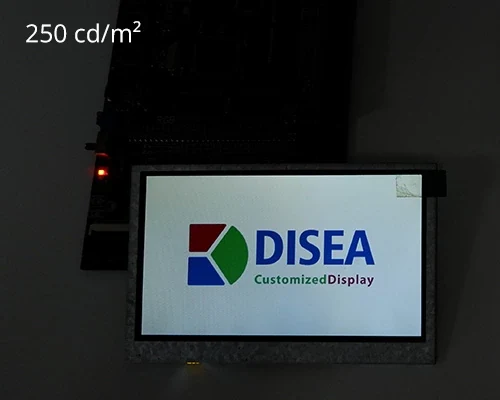
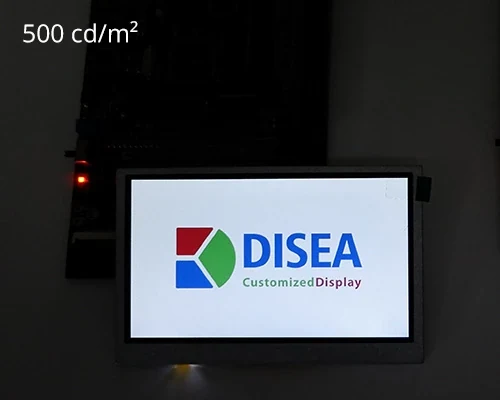
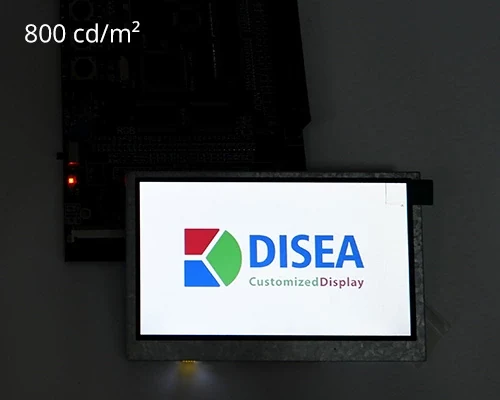
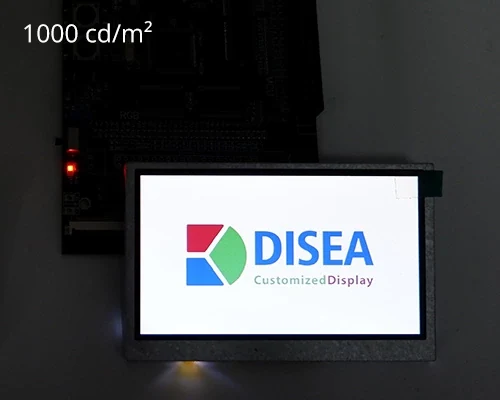
Same-size glass panel and driver IC with different backlight brightness.
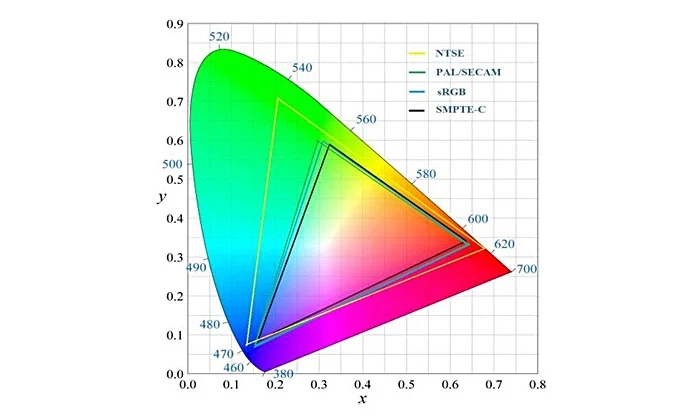
NTSC
Traditional backlights have limitations when increasing NTSC coverage. DISEA has evaluated quantum-dot technology, which can exceed 100% NTSC and can improve image vividness and make color transitions appear more natural.
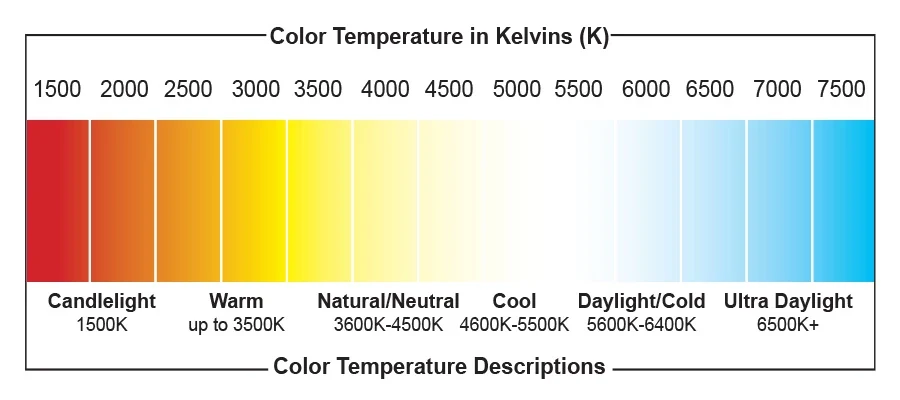
Colour Temperature in Kelvins
White is the most widely used TFT LCD backlight color. Typical options include warm white around 3500K, neutral or positive white around 5500K and cool white around 6500K. The LED color can be selected to suit the product's visual preference or UI design.
Driver circuit
Small backlights normally require relatively low voltage and current, which many motherboards can provide directly.
High-brightness or larger products may use dozens of LEDs and can require much higher voltage or current. For these projects, DISEA can provide an adapted backlight driver circuit that matches the customer's output requirements and reduces secondary development work.
Heat dissipation
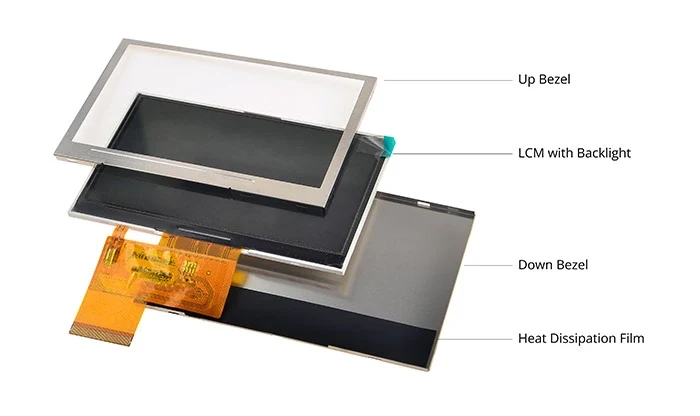
High-brightness products normally consume more power and produce more heat. The backlight design therefore needs a suitable thermal structure, which may include heat-dissipation film, aluminum substrate material or other heat-spreading measures.
Power consumption
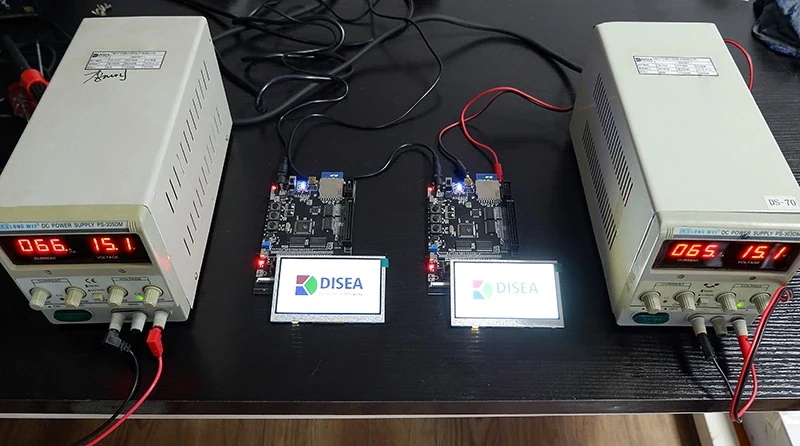
The backlight usually accounts for a larger share of an LCM's power consumption than the TFT LCD panel. Battery-powered and handheld products may prioritize lower consumption, while other applications may prioritize brightness.
Optical materials such as DBEF or brightness-enhancement films can sometimes raise visible brightness without a corresponding increase in power consumption.
Cables
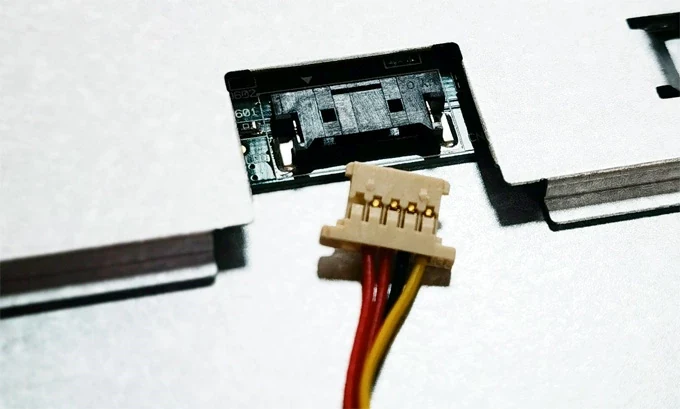
A backlight can be connected through the LCD FPC and controlled through a shared port, or it can use a separate cable and connector. The correct arrangement depends on the product structure, and a dedicated cable is generally preferred when the current is higher.
LED life
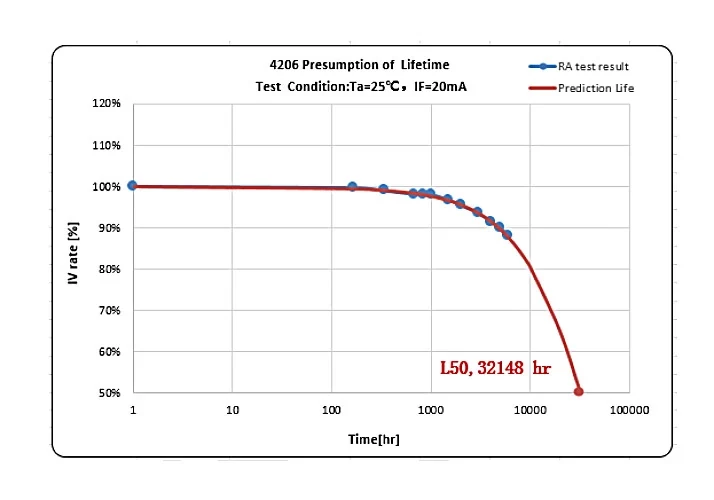
The TFT LCD panel uses inorganic materials and can have a long service life. In many modules, the LED backlight is the component that determines the practical operating life of the complete TFT LCD module.
LED lifetime is considered reached when brightness falls below 50% of its initial value. Standard products can achieve at least about 30,000 hours, while targets of 50,000, 70,000 or 100,000 hours can also be evaluated.
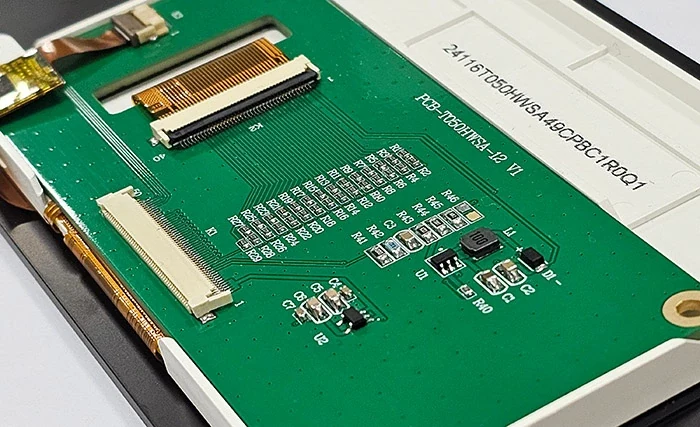
*The pictures show real customized-product cases. Only partial views are displayed to protect customer products and information.
For requirements involving power consumption, brightness, voltage, current, heat dissipation or service life, DISEA can evaluate the project and propose a suitable backlight solution.
3 Technical Experts And 70+ Project Engineers Will Assiste You
More than 70 engineers support DISEA projects, including team members with experience at major TFT LCD module companies. Core team members bring extensive display-industry experience to custom project reviews.
Send Message