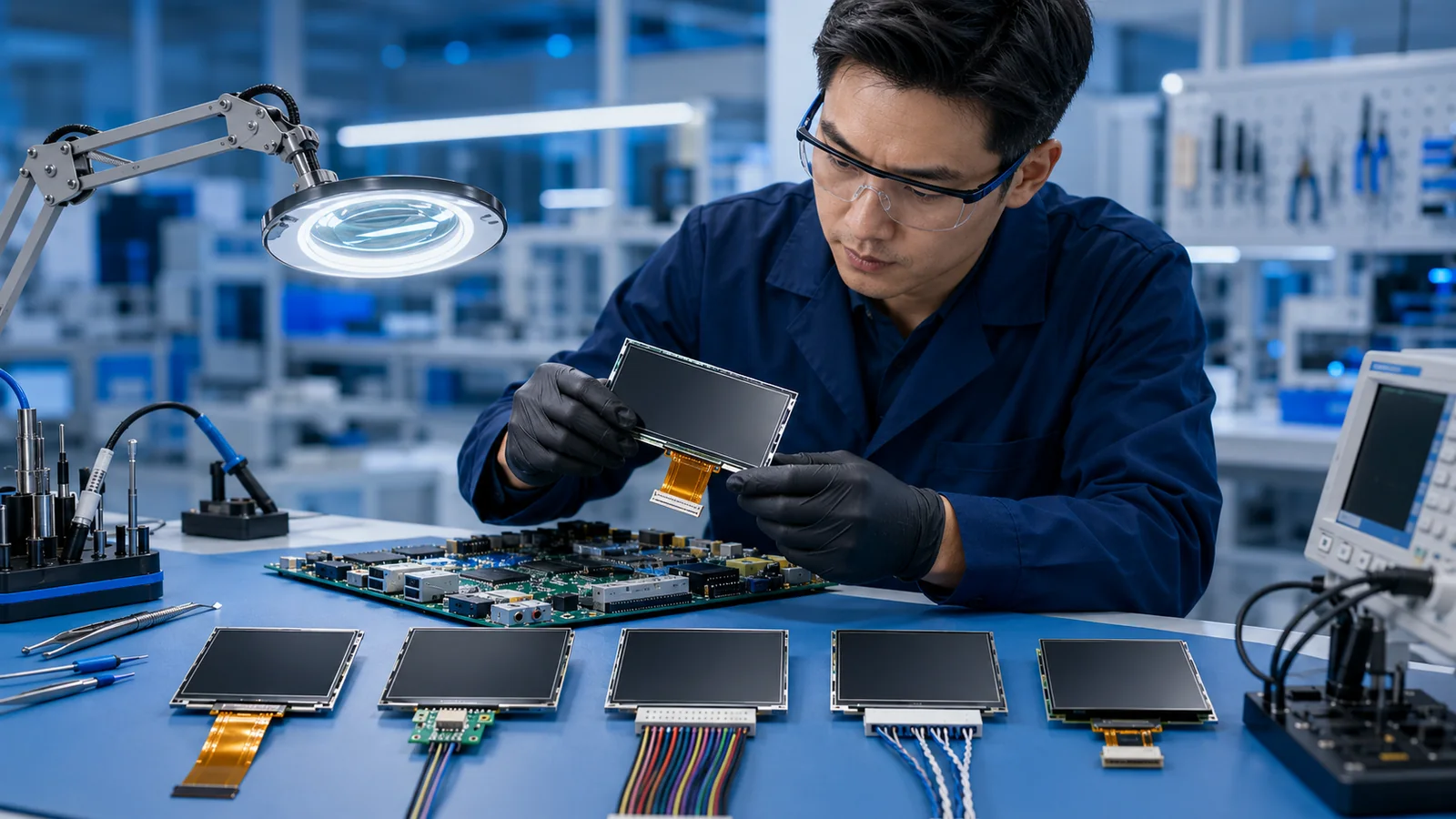
INTERFACE SELECTION • 9 MIN READ
How to Select a TFT LCD Interface: SPI, MCU, RGB, LVDS or MIPI
Compare bandwidth, pin count, host requirements and integration risks across the main TFT LCD interfaces.
Read guide →Technical articles for engineers, sourcing teams and product developers selecting or customizing TFT LCD display modules.
Explore interface, touch, outdoor readability, wide-temperature reliability, mechanical integration and RFQ preparation for TFT LCD projects.
Compare bandwidth, pin count, host requirements and integration risks across the main TFT LCD interfaces.
Read guide →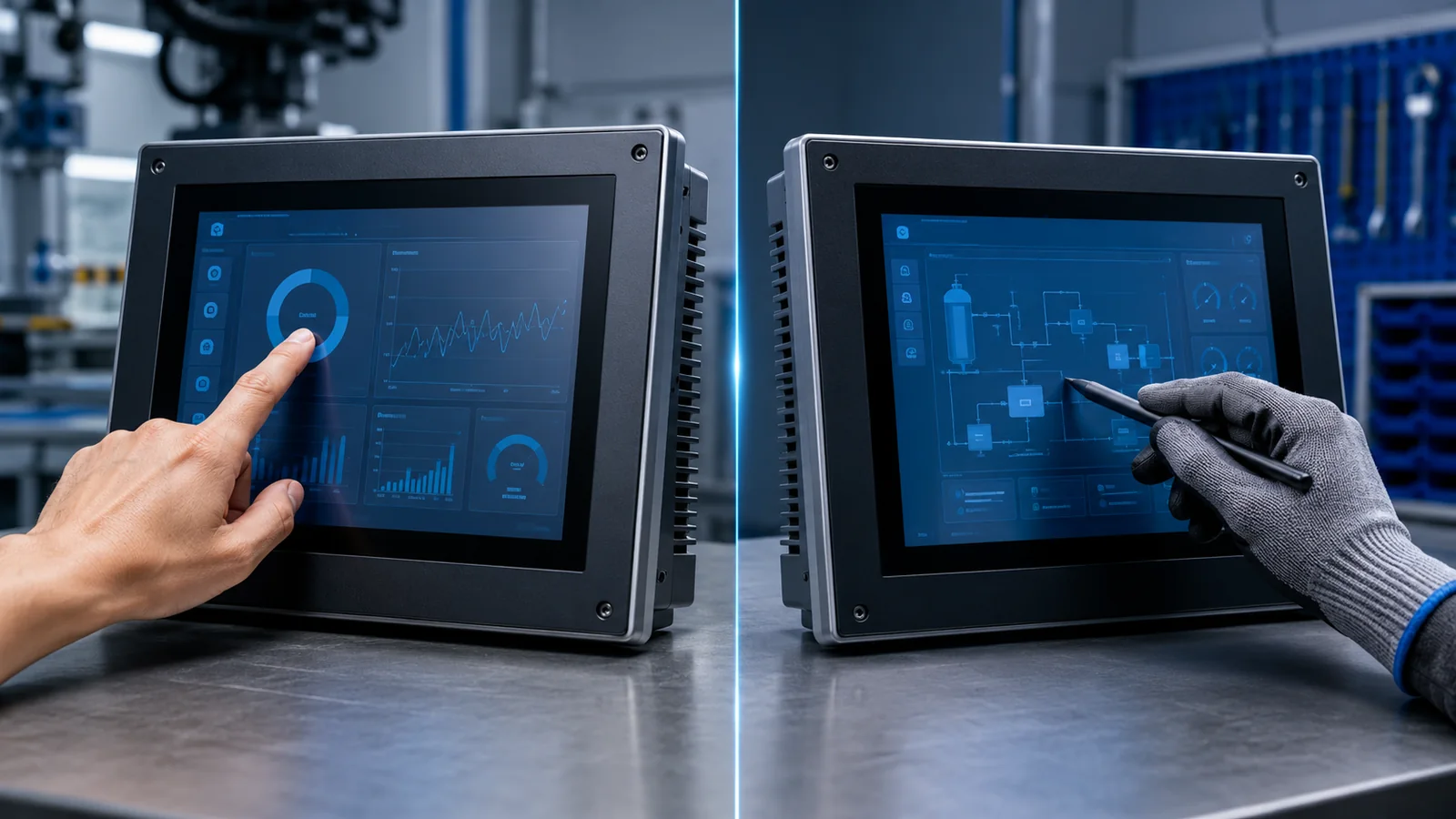
Choose the touch technology around gloves, water, stylus input, cover glass and controller tuning.
Read guide →
Connect luminance, reflection control, bonding, polarizers and thermal design for outdoor equipment.
Read guide →
Review cold response, high-temperature loading and the materials that determine display reliability.
Read guide →
Check active area, outline, tolerance, FPC direction, connector and pin assignment before design freeze.
Read guide →
Organize application, interface, touch, environment, drawing, quantity and project timing for a useful RFQ.
Read guide →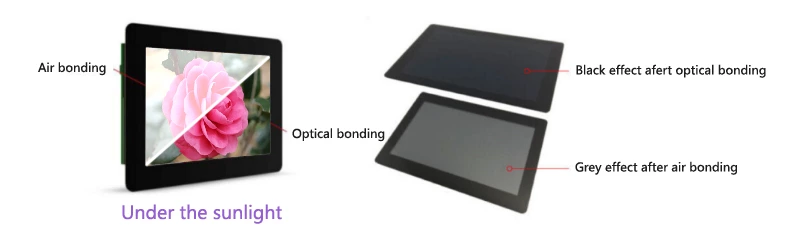
See how viewing angle, backlight, touch controller and bonding choices work together.
Read article →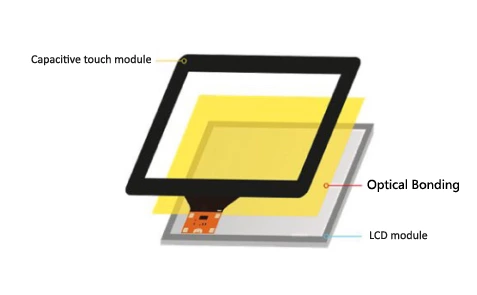
Compare optical bonding, brightness films, viewing-angle films and industrial touch controllers.
Read article →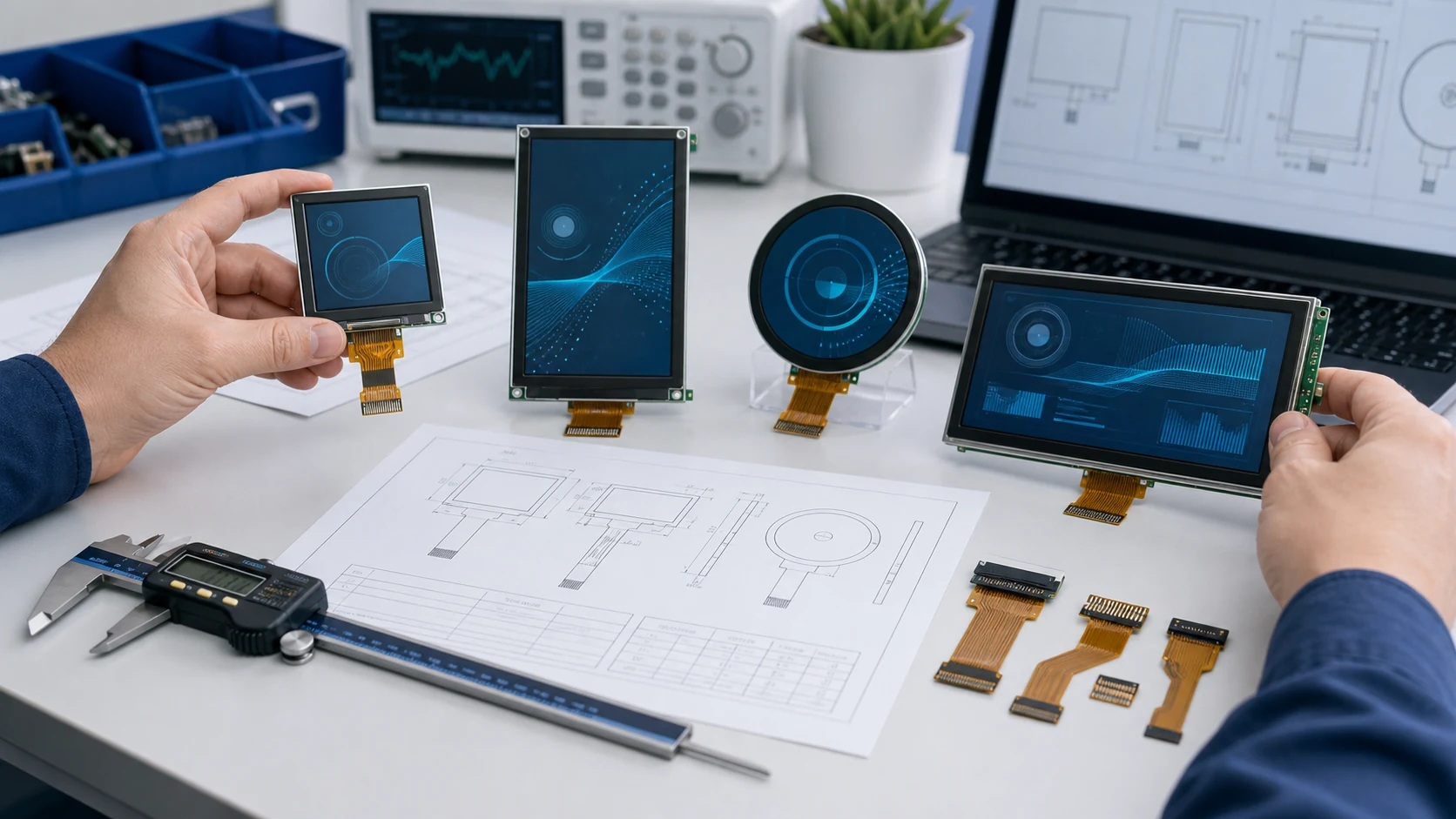
Define size, interface, optics, touch, environment and commercial requirements before selecting a module.
Read article →Prepare these points internally, or send the available information and let the team help organize the next step.
A partial drawing, model number, device photo or interface description is enough to begin a technical discussion.