Custom TFT LCD Displays for Industrial & Embedded Products
DISEA Micro, operated by DISEA Electronics Co., Limited, develops TFT LCD modules around the equipment they go into. Host interface, touch method, brightness, operating temperature, FPC routing and mechanical fit are settled before samples — not after tooling.

Factory processes buyers can review
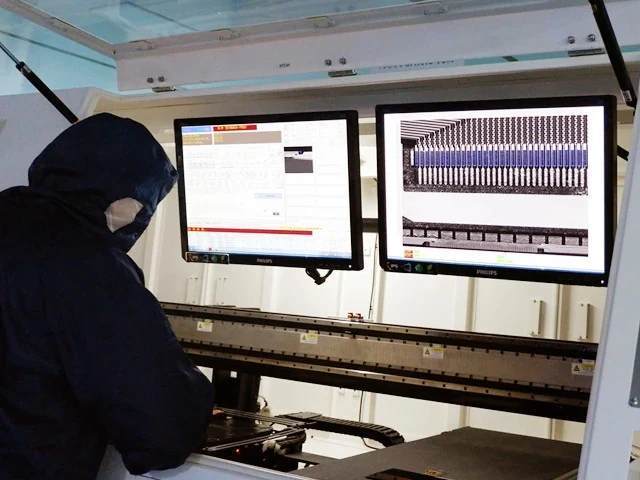
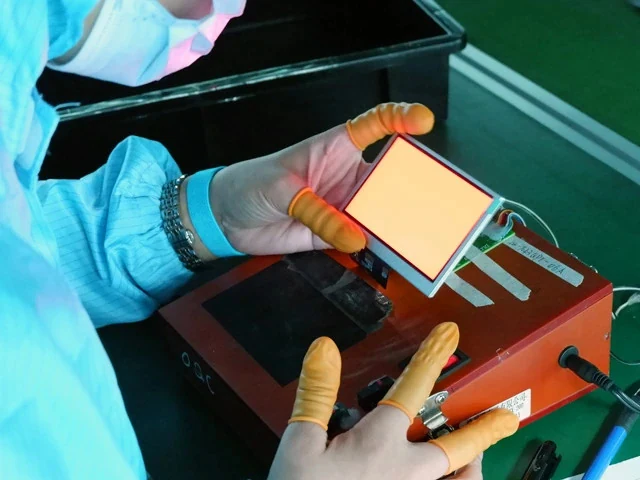
See the manufacturing base and representative steps used for display preparation, bonding inspection and finished-module testing. The complete factory page documents the production workflow in detail.


How a custom display project runs
Four stages, each with a defined output, so that expensive decisions are made against evidence rather than assumption.
Requirement review
Application, environment, interface, mechanical envelope, touch method, optical target and forecast collected and checked for internal conflicts.
Feasibility & proposal
Panel, backlight, touch stack, FPC and interface proposed with trade-offs stated: what is standard, what needs tooling, what drives cost and lead time.
Sample & validation
Drawing and datasheet issued, sample built and evaluated in the actual equipment. Fit and behaviour confirmed before tooling is committed.
Production & continuity
Inspection and test plan, pilot run, then scheduled production with revision control and lifecycle communication for repeat orders.
Specification review before samples, not after tooling
Most display problems in embedded products are decided long before a purchase order is raised. A backlight chosen for an indoor lab bench that ends up in direct sunlight. A capacitive sensor specified without the glove requirement. An FPC tail leaving the module on the wrong side of the bracket.
Scope, stated plainly. The published catalogue covers 0.96–1.77 inch and 2.0–3.5 inch. Larger diagonals are handled as ODM development projects against a defined specification and forecast — not quoted from stock.
Or start from the constraint that is hardest to change
Eight areas where the specification is usually won or lost. Each states what to declare, how it is verified, and the trade-offs it forces elsewhere.
Industrial & HMI Integration
Panel-mount and embedded controllers, machine interfaces and instruments — where revision control and supply continuity weigh as heavily as the optical spec.
View requirements → BrightnessSunlight Readable
Where the nit figure comes from, what optical bonding and polarizer choice change, and the power and thermal cost inside a sealed enclosure.
View requirements → TemperatureWide Temperature
Storage range is not operating range. Cold-start response, heater options, material limits and the validation evidence to request.
View requirements → InterfaceSPI, MCU, RGB, LVDS & MIPI
Matched to host capability and target resolution — bandwidth, pin count, cable length, and when a controller board is the cheaper answer.
View requirements → PCAPCapacitive Touch
Sensor and controller pairing, cover lens thickness and printing, bonding method, and the glove, wet-finger and EMI conditions to declare.
View requirements → RTPResistive Touch
Where RTP still wins on cost, stylus and heavy-glove operation, and how the touch stack and bezel interact with sealing requirements.
View requirements → MechanicalCustom FPC & Pinout
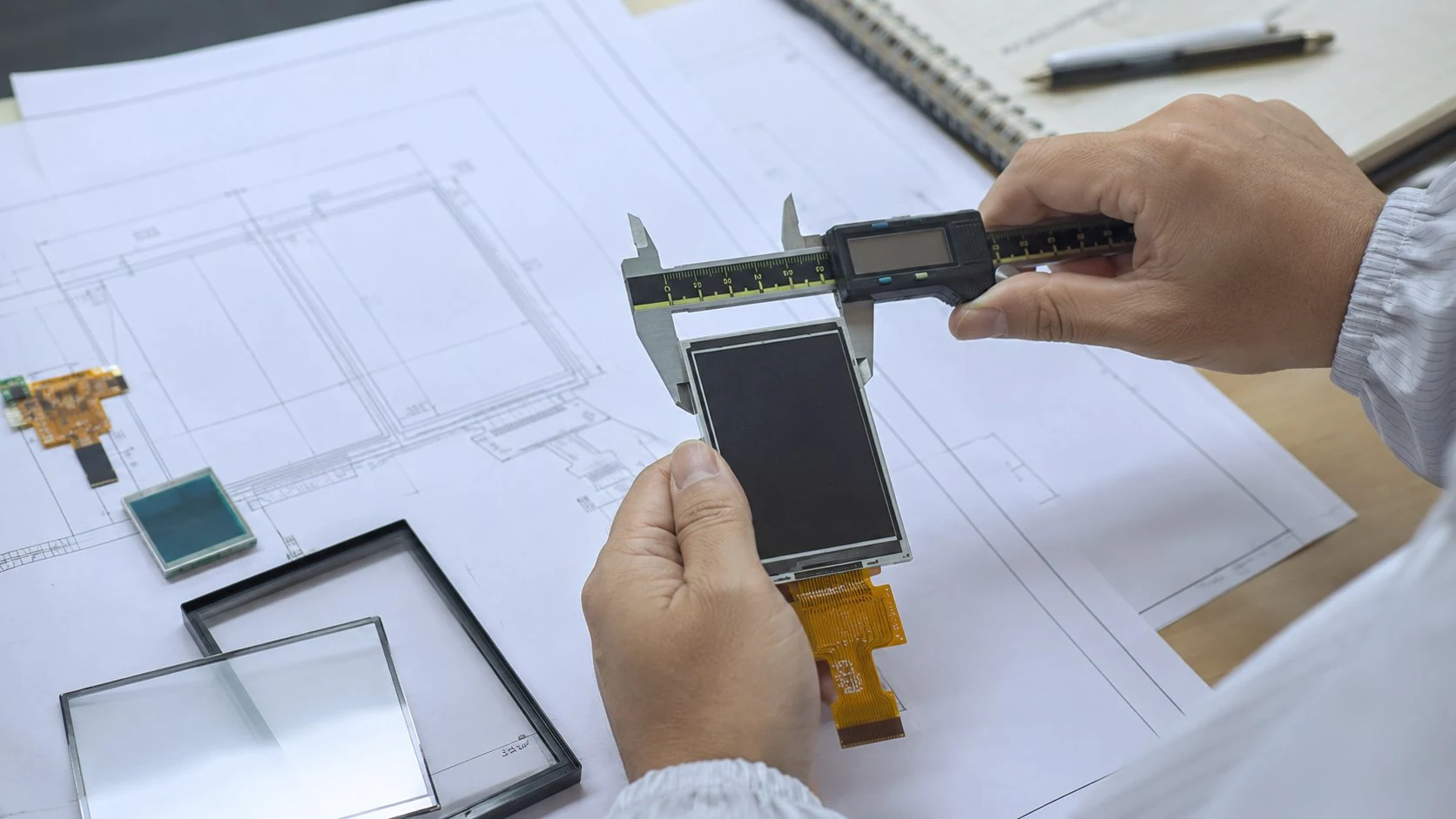
Tail direction and length, pinout definition, connector position — cheap to change on a drawing, expensive after the first tooling run.
View requirements → SourcingManufacturer Evaluation
What to verify before qualifying a China-based display supplier: engineering response, documentation, inspection and lifecycle commitment.
View requirements →The same panel behaves differently in different equipment
A sealed outdoor enclosure, a cleanable medical housing and a handheld instrument impose different requirements on an identical module.
Industrial equipment & HMI
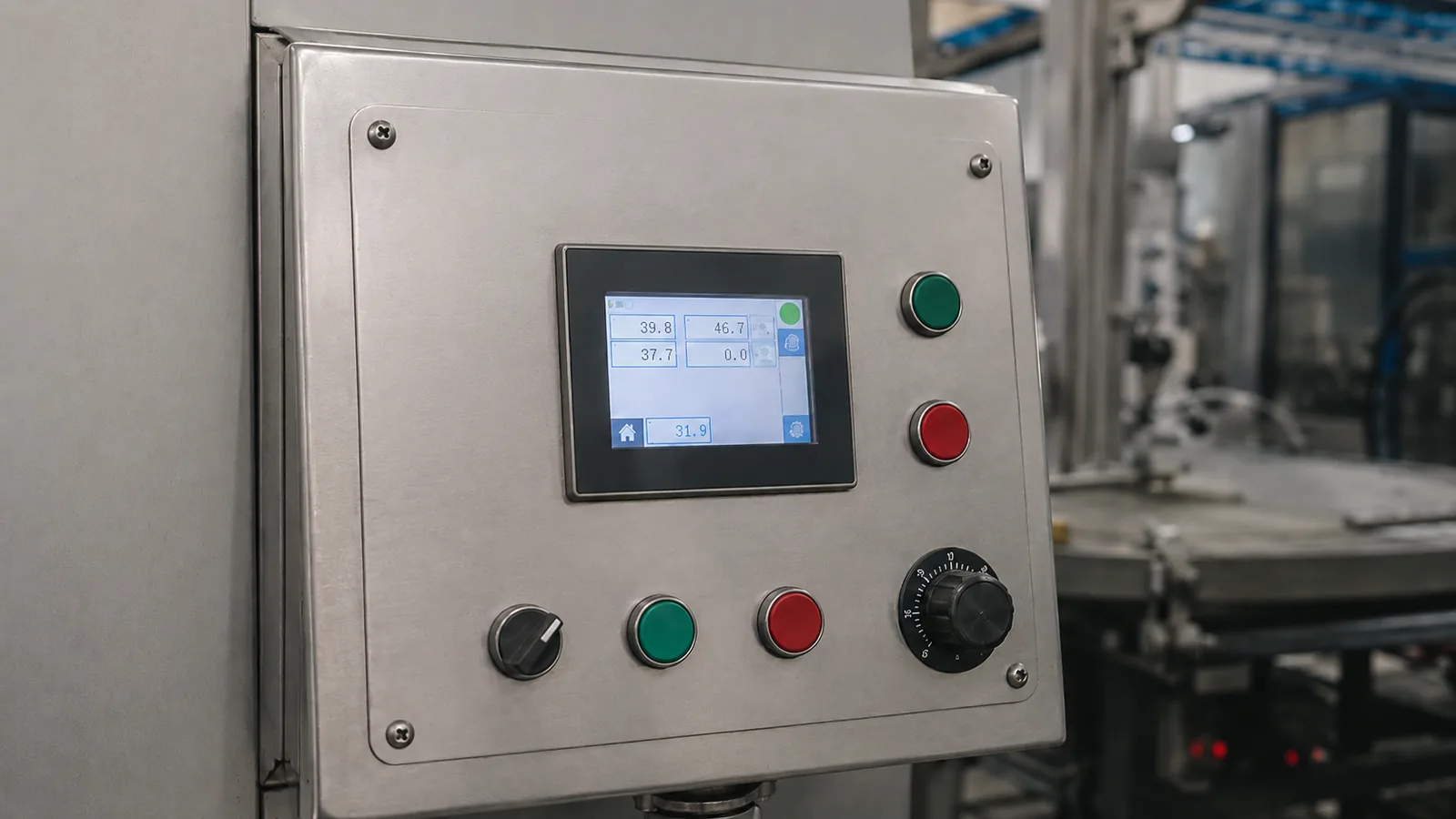
Panel-mount controllers, machine interfaces, measurement and test instruments. Long build cycles and supply continuity dominate.
Industrial →
Medical & laboratory
Analysers, benchtop instruments and monitoring equipment. Cleanable surfaces, viewing angle, documentation and change control.
Medical →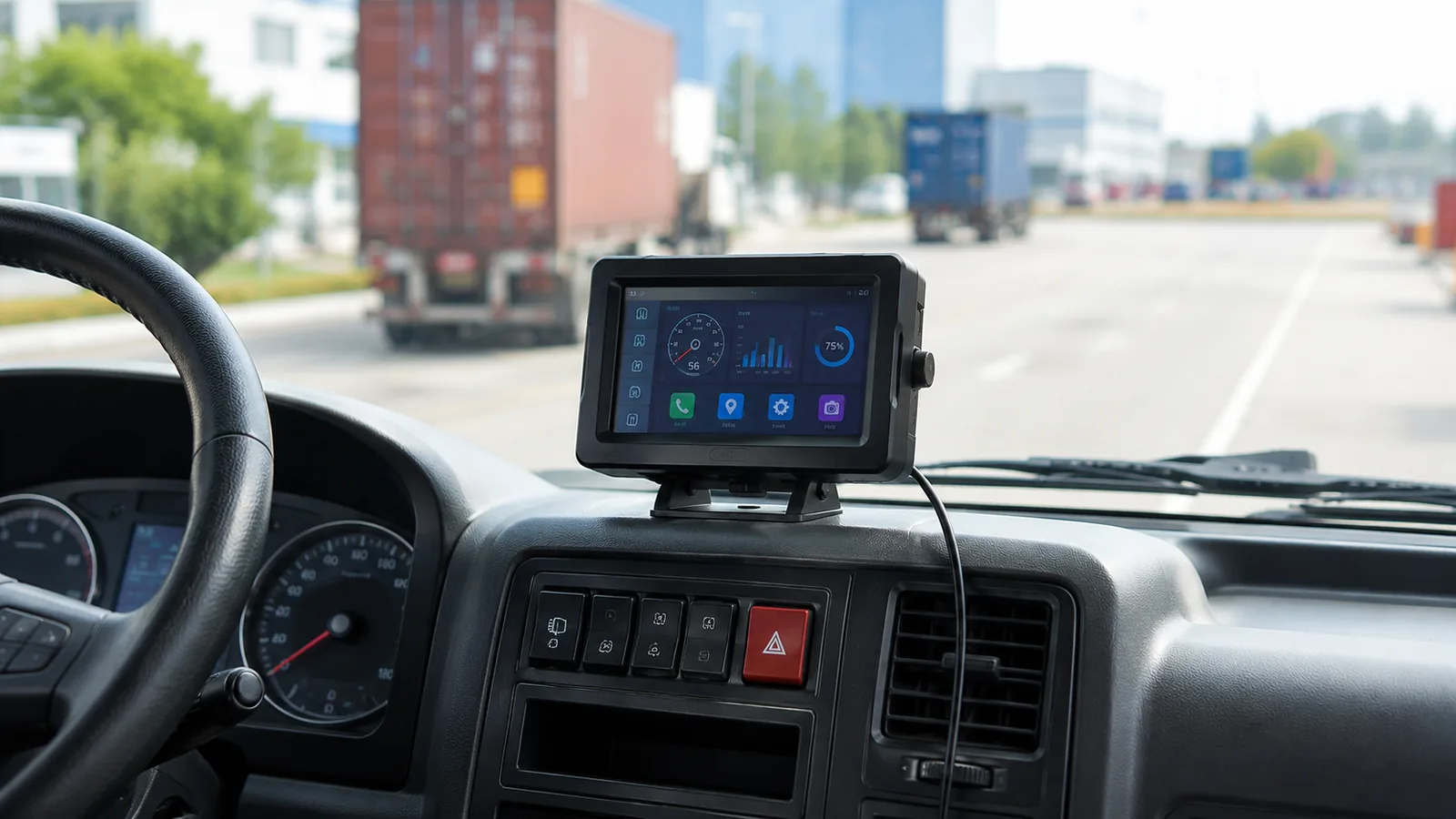
Vehicle & transport
In-cab and aftermarket transport displays, reviewed against the project's real temperature, vibration and sunlight requirements.
Vehicle →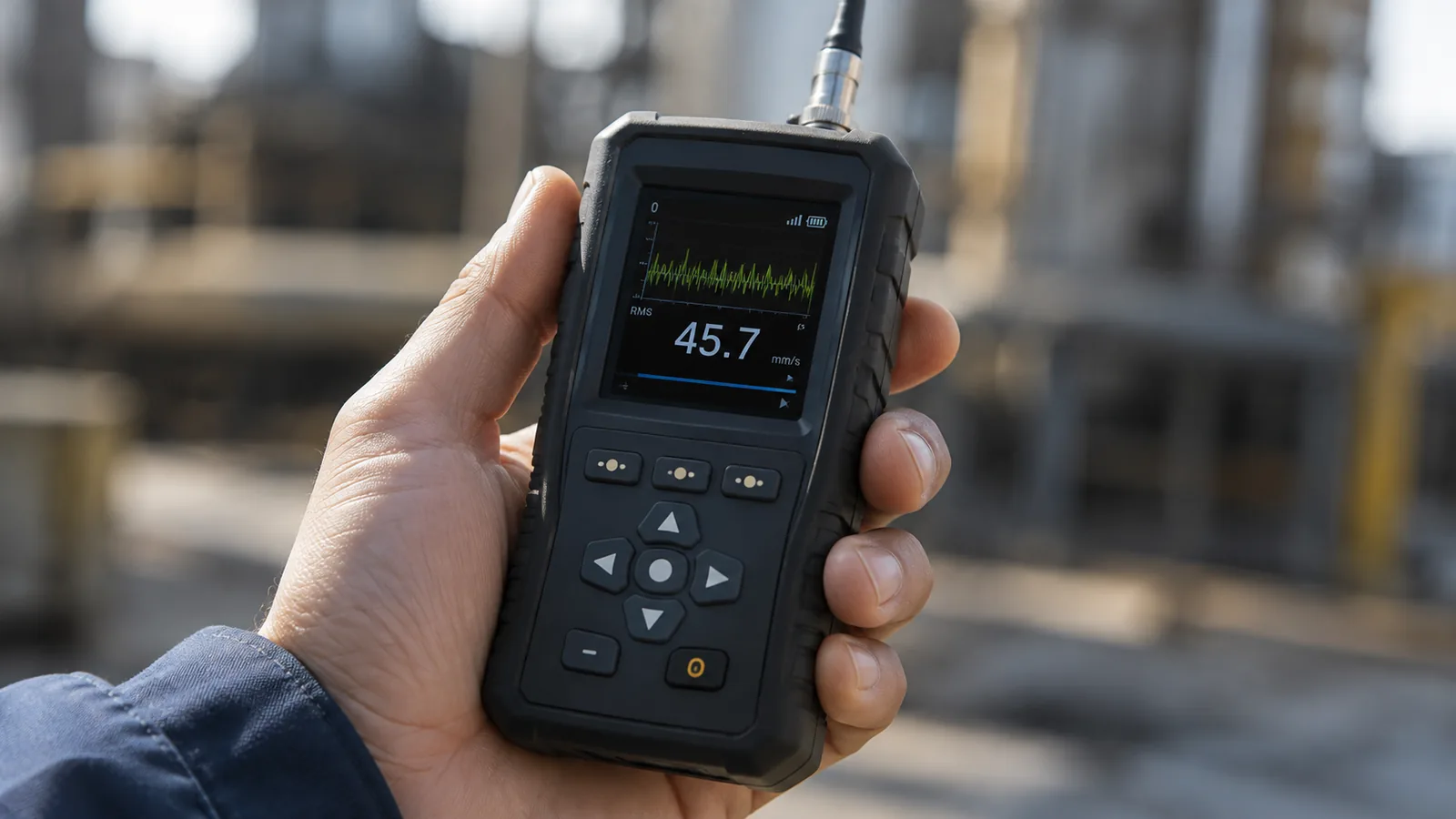
Handheld & smart devices
Portable products, building and home controls, consumer instruments — where size, power and cover-lens design drive the decision.
Applications →What to verify, from any candidate
Ask every supplier for the same three things. These are areas where process can be shown rather than claimed.
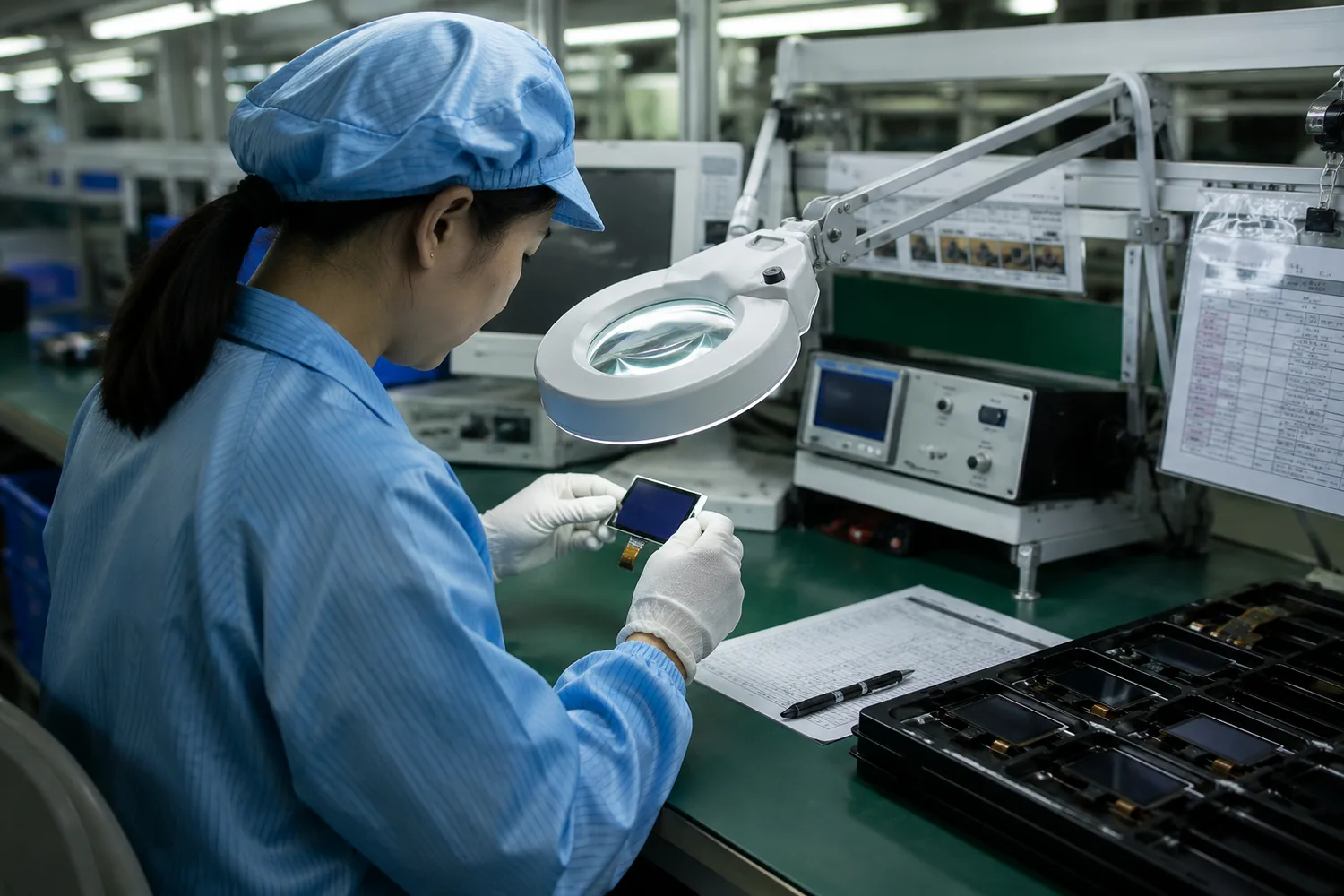
Inspection & test control
Incoming material inspection, in-process control, functional testing, aging and outgoing QC. Ask which checks apply to your module and what the sampling plan is.
Factory & quality →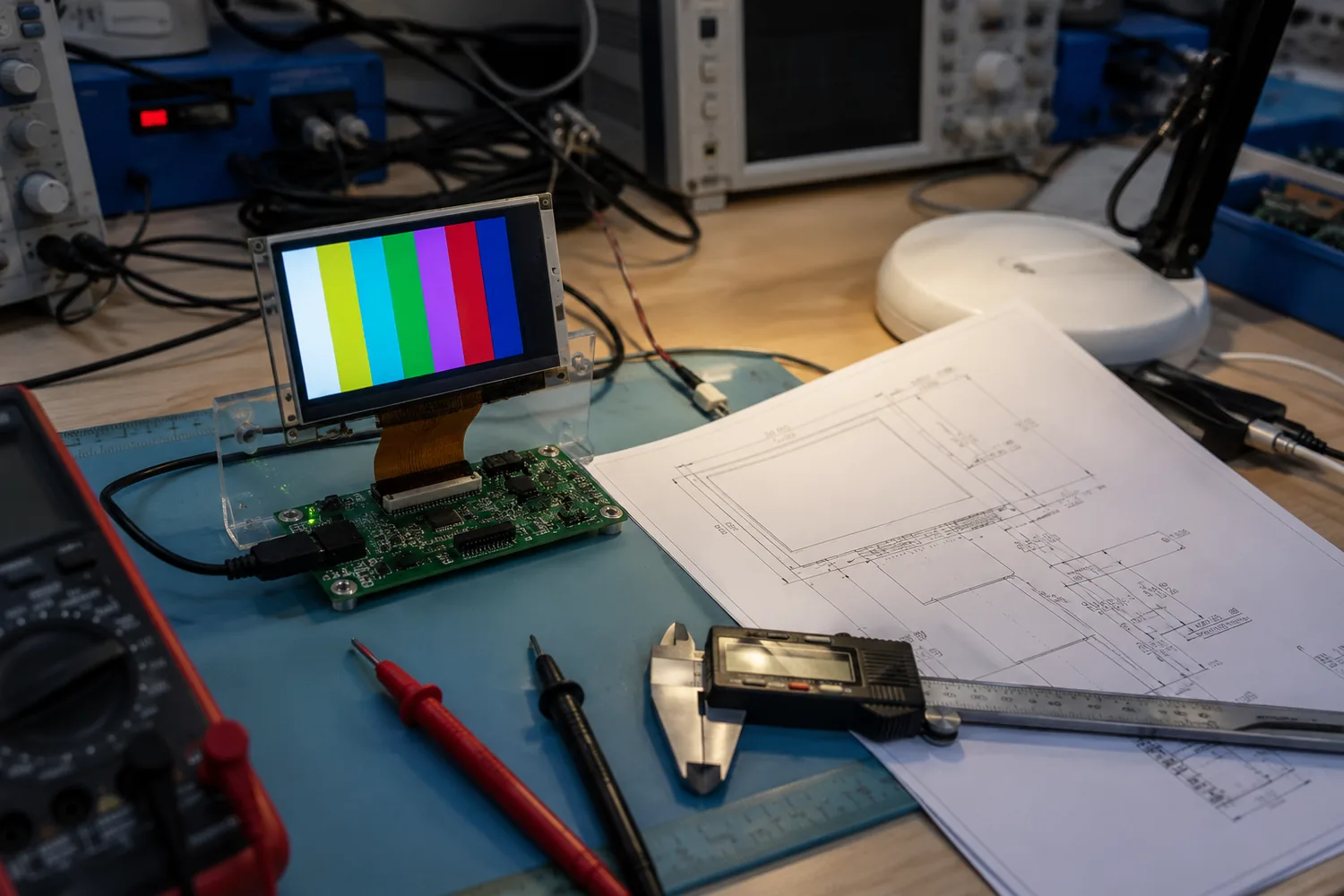
Drawings & test conditions
Specification table, mechanical drawing, pinout definition and the conditions behind every optical and temperature figure — before sample approval, not after.
Drawing checklist →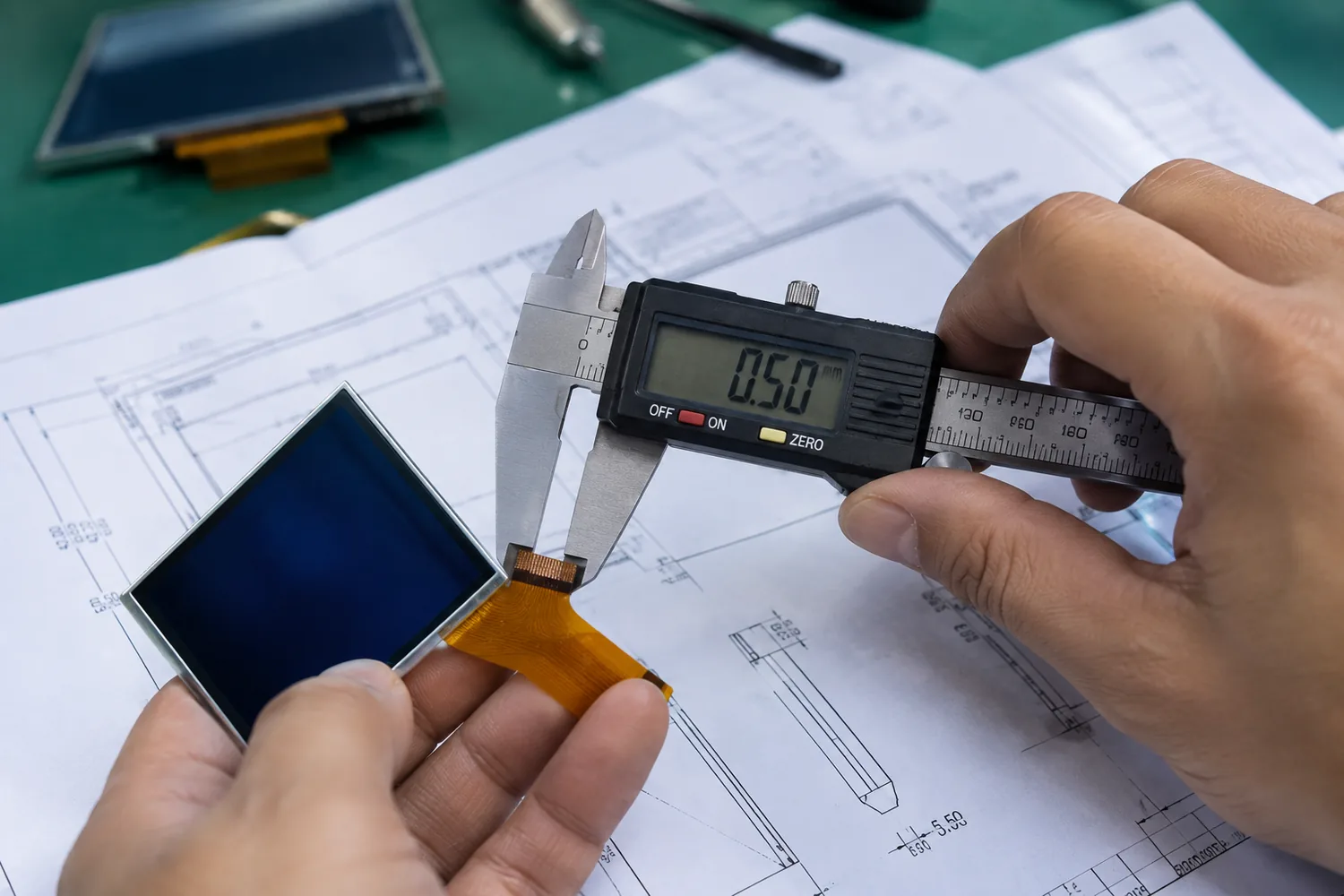
Customisation & continuity
Which changes are feasible, what they cost in tooling and lead time, and how long a construction can be supplied for a multi-year build cycle.
Customisation →Answers to the questions that delay projects
Written for the engineer or buyer who has to justify the choice internally.
SPI vs MCU vs RGB vs LVDS vs MIPI
Which interface fits the host processor and target resolution, and what each costs in pins, bandwidth and cable length.
Read →PCAP vs resistive touch for industrial HMI
Gloves, water, sealing, cost and cover-lens design — how operating conditions decide the touch technology.
Read →How many nits does outdoor equipment need?
Reading brightness figures correctly, and where bonding and polarizer choice matter more than raw luminance.
Read →Operating temperature and cold start
Why storage range is not operating range, what happens to response time in the cold, and what to validate.
Read →What to include in a custom display RFQ
The parameters that let a supplier answer accurately first time — and the omissions that cause re-quoting.
Read →Reviewing drawings, FPC direction and pinout
A checklist for the mechanical and electrical details that are cheap on paper and expensive after tooling.
Read →Common questions
What information should I send for a display recommendation?
Target size, resolution, host interface, brightness requirement, touch method, operating environment, mechanical limits and estimated annual quantity. If any of these are still open, say so — an assumption stated explicitly is far easier to correct than one hidden inside a quotation.
What sizes can you actually supply?
The published catalogue covers 11 diagonals from 0.96 to 3.5 inch with documented specifications, drawings and sample availability. Larger diagonals are handled as ODM development projects against a defined specification and forecast, rather than quoted as stock items.
Can I order samples before mass production?
Yes. Standard module samples can be arranged for evaluation, with datasheets, drawings and basic integration guidance provided before a pilot order.
Which display interfaces do you support?
RGB, LVDS, MIPI, SPI and MCU directly, plus HDMI or UART via a controller board. The right choice depends on the host processor and target resolution — see the interface selection hub or review TFT LCD driver and controller boards when signal conversion is required.
Can the touch panel, cover lens and FPC be customised?
Yes. PCAP or RTP touch, cover lens shape and printing, FPC direction and length, connector position, backlight and interface board can all be reviewed. FPC and connector changes should be settled before tooling — see the FPC and pinout hub.
What affects MOQ and lead time?
Whether the module is standard or customised, material availability, tooling requirements, sample quantity and the production schedule at the time of order.
How do you support quality and long-term supply?
Incoming inspection, process control, functional testing, outgoing QC, reliability review and lifecycle communication for repeat orders. The applicable checks depend on the module and application — see factory and quality.
Send a specification, get an engineering answer
Size, resolution, interface, touch, environment and quantity are enough for a concrete recommendation — including a straight answer when the requirement is better served a different way.
- Module recommendation against your actual constraints
- Custom touch, cover lens, FPC and driver board review
- Industrial, medical, transport and smart-device applications
- Datasheet, drawing, sample and production support
Not ready for an RFQ? Start with the requirements checklist to see what to collect first.